





Why do people move to Littleton, CO, and what makes living here so unique?
People move to Littleton for a rare combination of historic small-town character, immediate outdoor access to trails, water, and Red Rocks, top-tier public schools, and light rail connectivity to Denver, all within a compact, financially stable community.
Why Littleton, CO Matters Right Now for Move-Up Buyers and Relocators
If you are weighing suburbs across the Denver Metro, Littleton deserves more than a passing glance. This is a city of roughly 46,246 residents (as of July 2025, per Census QuickFacts) that has grown by 1.3% since the April 2020 Census base, a measured, deliberate pace that signals demand without the instability of a boom town.
What does that mean for you? It means you are looking at a community that people choose carefully and then stay in. The median household income sits at $98,800 (per Census data), well above the national median of $78,538. More than 56.4% of adults 25 and older hold a bachelor’s degree or higher, nearly double the national rate of 35.0%.
When I advise relocating professionals and move-up families, one thing I consistently point out is that these aren’t just numbers on paper. They reflect who your neighbors will be, how the community invests in itself, and whether the community has the demographic profile associated with long-term stability. In Littleton, those fundamentals are notable.
Historic Downtown Littleton: Small-Town Charm You Can Actually Walk
So what sets Littleton apart from every other Denver suburb with decent homes and a Target nearby? Start with its origin story.
Littleton was founded in 1890. That is not a marketing tagline. It means Main Street features preserved Victorian-era architecture, independent coffee shops, farm-to-table restaurants, local boutiques, and seasonal farmers markets that draw the whole community out on weekends. When I first experienced Littleton’s downtown, what struck me was that it felt like a real town, not a planned retail center with a clock tower bolted on for atmosphere.
Why This Matters for Your Daily Life in Littleton
You can walk to dinner, browse a bookshop, grab coffee from a local roaster, and bump into neighbors along the way. For move-up buyers coming from denser urban areas or from sprawling suburbs that lack a center, this walkable, historic core is a genuine differentiator.
At just 12.63 square miles (per 2020 Census data), Littleton packs a fully realized downtown, multiple parks, and extensive trail systems into a compact footprint. You are not driving 20 minutes to reach a community gathering spot. It is right there.
And here is something relocators from other states often tell me surprises them: this historic character is not frozen in time. The farmers markets, live music events, and restaurant scene keep the downtown vibrant and evolving season after season.
Outdoor Lifestyle in Littleton, CO: Trails, Water, and Red Rocks at Your Doorstep
If you are moving to Colorado, you are probably drawn to the outdoor lifestyle. But here is the question I encourage every buyer to ask: how accessible is that outdoor lifestyle from your actual front door on a Tuesday evening, not just on a planned weekend road trip?
In Littleton, the answer is remarkably accessible. Residents enjoy immediate access to the South Platte River Trail system, Waterton Canyon for hiking and wildlife viewing, and Chatfield State Park for cycling, paddling, and picnicking. Colorado’s roughly 300 days of sunshine mean this is a year-round lifestyle, not something you squeeze into three good months.
Rare Lakeside Living in a Landlocked State
Here is a detail that catches many relocators off guard: Littleton offers waterfront neighborhoods. Grant Ranch, for example, provides paddle boarding, kayaking, and seasonal sailing right within the community. Waterfront access is exceptionally uncommon in landlocked Colorado, and the fact that you can find it in Littleton is one of those differentiators that is nearly impossible to replicate in other Denver Metro suburbs.
Red Rocks: Littleton’s Backyard Amenity
Littleton is my old stomping ground, one of my favorite memories living there is of my beloved husky, Thor after first moving to Colorado, he’d spent his days running and playing across our large backyard, I had so much fun exploring the neighborhood trails with him, and his long pit stops to sniff and inspect every corner of the community (lol be honest does your furbaby do that too?) on our way to the Dekoevend park and our favorite High Line Canal Trail. But one of the best part of living there was having Red Rocks Amphitheatre essentially in our backyard.
Red Rocks is not just a concert venue. Quick sunset hikes became a routine part of my week, not a special occasion. For you, that means your fitness routine and your entertainment calendar are both elevated just by living in Littleton. Pair that with access to Colorado’s 14ers (peaks above 14,000 feet) for weekend summit attempts, and you start to understand why people who move here are reluctant to leave.
Littleton Public Schools and Community Stability for Families
For families with school-age children, the school district is often the single most important filter. Littleton is served by Littleton Public Schools, an established, named district that draws families specifically because of its reputation.
The community’s educational attainment statistics reinforce this: 96.2% of adults 25 and older are high school graduates or higher (2019–2023 ACS, per Census data), and the poverty rate is just 6.3%, nearly half the national figure of 11.1%. What I tell my clients is that these numbers matter because they reflect the environment your children grow up in, the peers they learn alongside, and the level of community investment in educational outcomes.
Established Neighborhoods with Room to Grow in Littleton
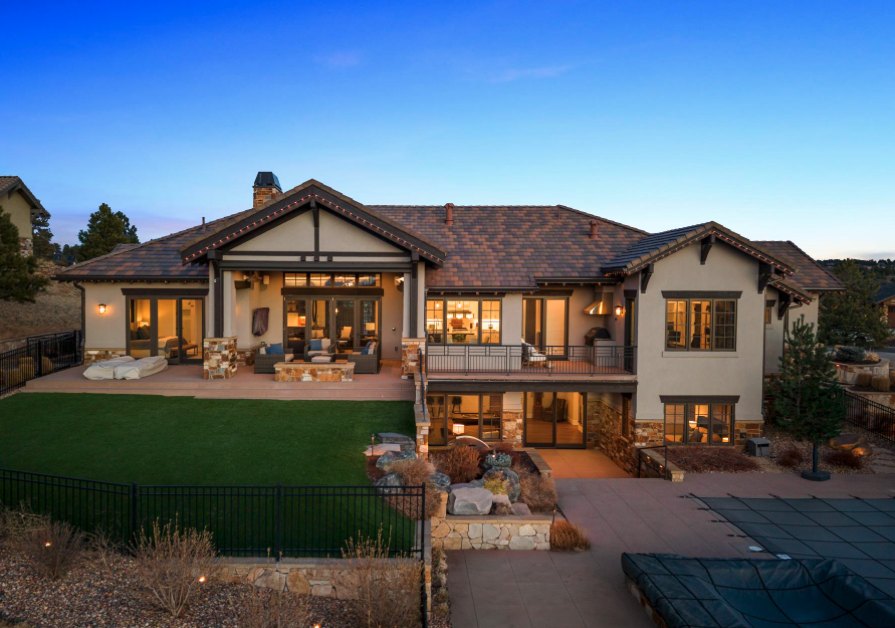
Unlike newer subdivisions where you can see into your neighbor’s kitchen, many of Littleton’s established neighborhoods feature larger lots and mature, tree-lined streets. When Thor and I walked those streets, the canopy of shade trees and the sense of calm set Littleton apart from anything I had experienced in newer Denver Metro developments. For move-up buyers trading a starter home for their next chapter, that combination of space, mature landscaping, and neighborhood character is exactly what you have been searching for.
The city’s average household size of 2.19 persons (2019–2023 ACS, per Census data) across 20,300 households indicates a housing stock that serves a range of family structures, from couples and small families to downsizers who want to stay in a community they love.
Commuting from Littleton, CO: Light Rail, Highways, and Remote-Work Readiness
You want suburban space without a soul-crushing commute. Littleton delivers. Two RTD Light Rail stations connect you directly to Downtown Denver and the Denver Tech Center (DTC), which means you can skip highway traffic entirely for your daily commute.
The mean travel time to work for Littleton residents is ~26 minutes (2019–2023 ACS, per Census data), which is nearly identical to the national average of ~26.6 minutes. That may surprise you. Littleton feels like a retreat from the city, yet you lose almost nothing in commute time.
Built for the Remote and Hybrid Workforce
What if you work from home most days? Littleton is ready for that, too. Census data shows that 96.4% of households have a computer and 94.1% have broadband internet subscriptions, both above national averages. This is a tech-comfortable, remote-work-ready community. When I work with relocating executives and busy professionals, I point out that the combination of light rail access for in-office days and reliable broadband for remote days gives you maximum flexibility.
Financial Stability and Long-Term Value in Littleton’s Real Estate Market
Buying a home is one of the most significant financial investments you will ever make. What I emphasize to every client is that the community surrounding your home is just as important as the home itself when it comes to protecting long-term value.
Littleton’s financial profile is strong. A median household income of $98,800 (per Census data) and a poverty rate of just 6.3% tell you that the buyer pool here is financially resilient. As a Strategic Real Estate Advisor specializing in residential purchase, sale, relocation, investment, and custom home builds, I bring a disciplined, data-driven approach to every transaction. Your equity deserves that level of protection.
That mindset applies directly to navigating the Littleton market, where grounding decisions in hyper-local data rather than media noise can make the difference between a smart investment and an emotional overpay.
Frequently Asked Questions About Moving to Littleton, CO
What makes Littleton, CO a standout choice for move-up buyers and relocators?
Littleton combines a historic downtown founded in 1890, immediate access to trails and water recreation, strong public schools through Littleton Public Schools, and light rail connectivity to Denver. Its median household income of $98,800 (per Census QuickFacts) and low 6.3% poverty rate reflect a financially stable, education-focused community that stands out within the Denver Metro area.
What outdoor activities are available in Littleton, CO?
You have direct access to the South Platte River Trail system, Waterton Canyon for hiking and wildlife viewing, and Chatfield State Park for cycling and paddling. Neighborhoods like Grant Ranch offer kayaking and paddle boarding. Red Rocks Amphitheatre is close enough for Saturday morning yoga sessions or quick sunset hikes. Colorado’s roughly 300 days of sunshine make this a year-round lifestyle.
How are the schools in Littleton, CO?
Littleton is served by Littleton Public Schools, an established district. The community’s educational attainment is notable: 56.4% of adults hold a bachelor’s degree or higher, and 96.2% are high school graduates, both well above national averages (2019–2023 ACS, per Census data). Families relocating here often cite the school district as a primary reason for choosing Littleton.
Is Littleton, CO a good place for families?
Yes. With many neighborhoods offering larger lots, mature tree-lined streets, low poverty at 6.3%, strong schools, and abundant parks and trails, Littleton is built for family life. The compact 12.63-square-mile footprint (per 2020 Census data) means parks and community amenities are always nearby, and the historic downtown provides walkable family activities year-round.
How long is the commute from Littleton, CO to Downtown Denver?
The mean travel time to work for Littleton residents is ~26 minutes (2019–2023 ACS, per Census data), nearly identical to the national average. Two RTD Light Rail stations provide direct service to Downtown Denver and the Denver Tech Center, giving you a reliable, traffic-free commute option.
Can you find waterfront homes in Littleton, CO?
Waterfront living is exceptionally rare in landlocked Colorado, but neighborhoods like Grant Ranch in Littleton offer lakeside properties with access to paddle boarding, kayaking, and seasonal sailing. This is a genuine differentiator for buyers who want water access without leaving the Denver Metro.
What is the population of Littleton, CO?
Littleton’s population was approximately 46,246 as of July 2025, per Census QuickFacts. The city grew 1.3% from its April 2020 base, reflecting steady, stable demand rather than speculative growth.
Is Littleton, CO good for remote workers?
Absolutely. Census data shows 96.4% of Littleton households have a computer and 94.1% have broadband internet, both above national averages. Combined with light rail access for occasional in-office days, Littleton is well suited for remote and hybrid professionals.
What makes Littleton’s downtown different from other Denver suburbs?
Littleton was founded in 1890, which means its downtown is authentic, not manufactured. Main Street features preserved Victorian-era architecture, independent shops, farm-to-table restaurants, and seasonal farmers markets. Unlike suburbs built around commercial centers, Littleton grew around a genuine historic core.
What is the median household income in Littleton, CO?
The median household income is $98,800 (2019–2023 ACS, per Census data), significantly above the national median of $78,538. This indicates a financially resilient community and a stable buyer pool.
The Bottom Line on Moving to Littleton, CO
Littleton is not just another Denver suburb. It is a compact, historically rooted city where your daily life includes trail runs along the South Platte, sunset hikes near Red Rocks, paddle boarding in Grant Ranch, and a walkable downtown that feels like it belongs to you and your neighbors.
You get strong schools, a financially stable community, light rail access, and the kind of mature, tree-lined neighborhoods that newer developments simply cannot replicate. Having lived in Littleton myself, I can tell you that this is a place where life genuinely unfolds differently than it does in the rest of the Metro.
When you are ready to explore Littleton’s neighborhoods and find the home that fits your next chapter, I would welcome the conversation. Reach out to me, Lubna Forbord | The Denver 100, LLC, your Strategic Real Estate Advisor at 303-810-1740. I bring a disciplined, data-driven approach to every transaction, and I am committed to protecting your investment and your family’s future.